

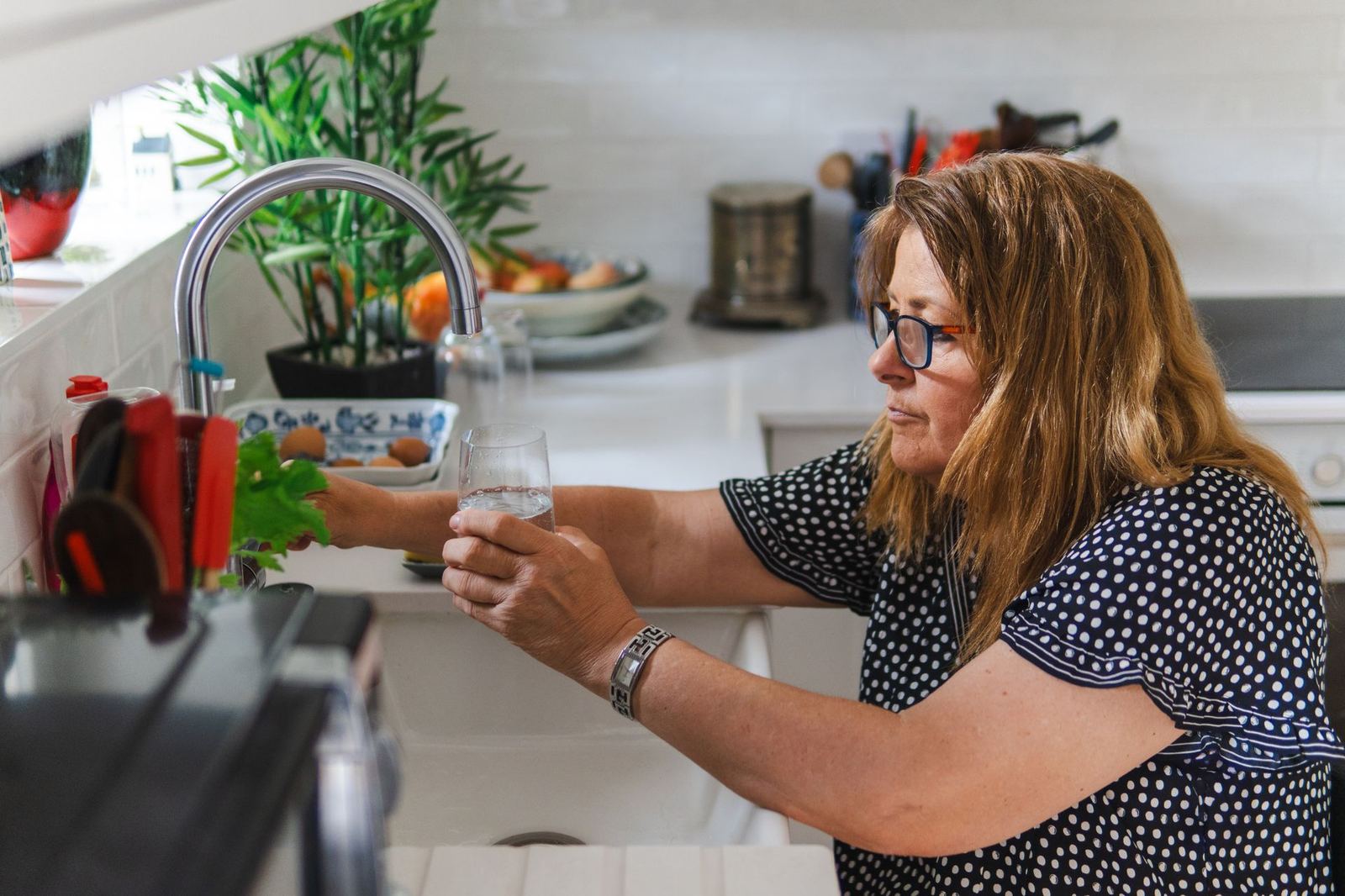
It is true reverse osmosis reduces minerals, but what does that mean? Facts on mineral addition, TDS and daily nutrition.
A frequent question about reverse osmosis (RO) units is whether the water is healthy. Some say it is harmful because it is stripped of minerals, while others see it as the safest option. The truth lies between the two and depends on proper use.
How does reverse osmosis work?
Water is forced at high pressure through a membrane with extremely fine pores. The membrane retains 95-99% of dissolved salts, heavy metals, ions such as nitrate, and microorganisms. What remains is pure water, usually with a TDS of 10-40 ppm. Retained contaminants leave through the reject line.
Is mineral loss a problem?
Water supplies only a small share of our daily mineral needs. Most calcium and magnesium comes from food; dairy, leafy greens and nuts are far more important sources. For a person with a balanced diet, RO water is not expected to cause a mineral deficiency. For those who find it bland and want extra calcium and magnesium, a mineral cartridge stage is recommended.
When should RO be preferred?
- If your mains water TDS is above 500 ppm or hardness is very high
- If there is concern about contaminants such as nitrate, arsenic, heavy metals or chloride
- For uses that call for pure water, such as baby formula, tea and coffee, and ice making
- If you use well or tank water (first with UV and a pre-filter)
Tips for proper use
- Replace filters on time; an exhausted carbon filter gives taste and odour, and a clogged pre-filter damages the membrane.
- Sanitise the tank every six months.
- If you have been away for a long time, drain the first two to three litres.
- Use the reject water for non-drinking purposes (garden, cleaning) or choose an efficient pumped model.
Conclusion
With proper maintenance and, if wished, mineral addition, reverse osmosis water is a safe and healthy drinking water solution. The first step in deciding which unit suits you is a water analysis. With our calculator you can see your capacity need and book a free analysis appointment online. This article is general information; for questions specific to your health, consult your doctor.
Three common questions
Is it suitable for babies? RO water is widely used to prepare infant formula, but it should be boiled and cooled and your paediatrician's advice should come first. Can it be used for plants? Yes, low-TDS water is excellent for delicate plants and aquariums. What about irons and coffee machines? Pure water prevents limescale, but check the manufacturer's instructions; some machines do not recommend fully demineralised water.
Remember: good water is the result not only of the device but of regular maintenance and the right choice. If in doubt, having your water analysed is the most reliable first step.